Garden fence types compared
What each common UK fence style is actually good at, where it struggles, and how to match one to your garden, your exposure to wind and the time you want to spend on upkeep.
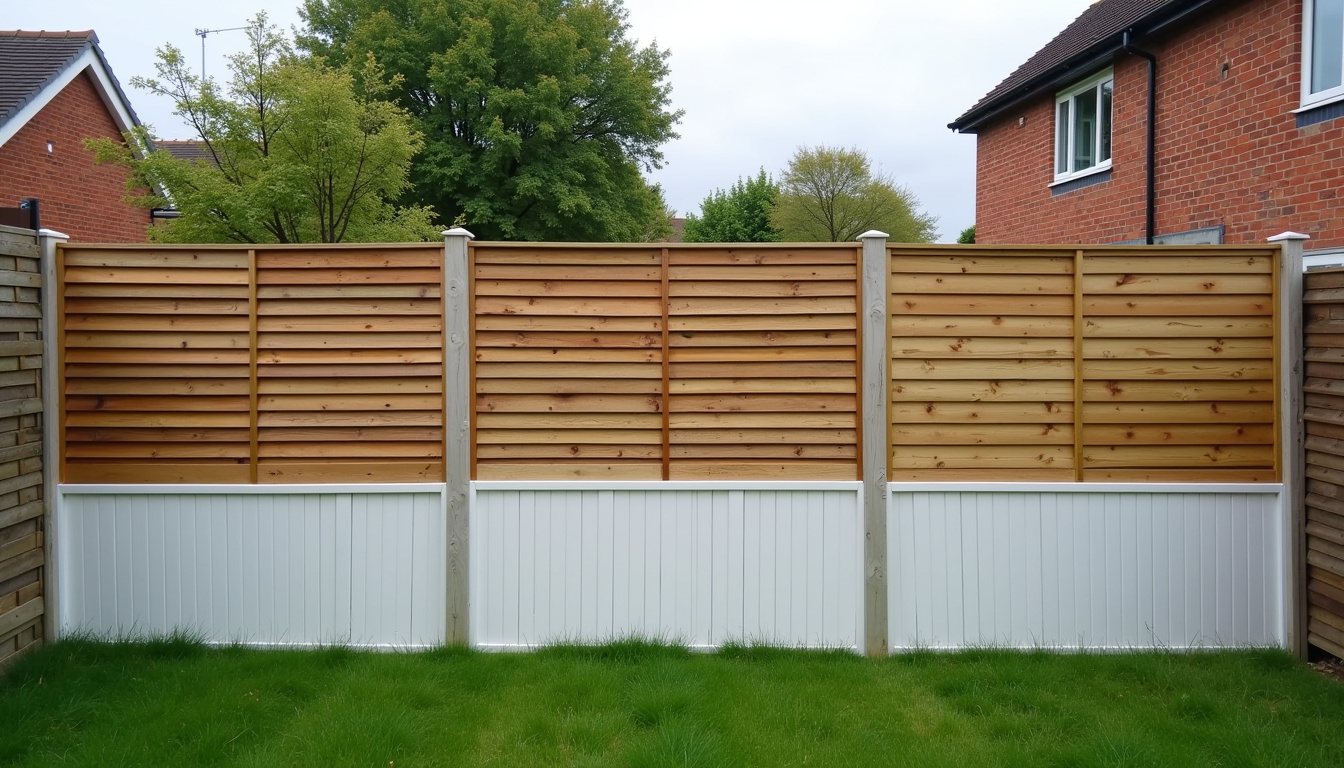
Most garden fences in the UK are built from a handful of designs. They look different, but the important differences are less visible: how the boards are held, how much wind the fence catches, and which parts will fail first. This guide works through the common types in that light, so you can shortlist one or two before you think about colour or price.
A quick rule before you start: the fence is only as good as its posts. A premium board design on poorly set posts will lean within a few winters. Read our guide to concrete vs timber posts and gravel boards alongside this one.
Closeboard (featheredge)
Closeboard fencing is built on site. Posts go in first, then horizontal rails (traditionally triangular "arris" rails, now often rectangular cant rails) are fixed between them, and vertical featheredge boards are nailed to the rails so that each one overlaps its neighbour by around 20–25 mm. A gravel board usually runs along the bottom.
Because every board is fixed individually, the fence spreads load well and a single damaged board can be swapped in minutes. It suits sloping ground, since the rails can be stepped or raked to follow the land. The trade-off is labour: building closeboard takes longer than dropping in panels, and it is fully solid, so on an exposed site it acts like a sail. Good post-setting and three rails on taller runs make a real difference.
Lap (overlap) and waney-edge panels
Lap panels are the familiar ready-made 1.83 m (6 ft) wide panels with thin horizontal slats overlapping inside a light frame. Waney-edge panels are the same idea with the bark-shaped edge left on the slats. They are quick to fit, widely available and among the cheapest ways to fence a garden.
Their weaknesses are well known. The slats are thin and can split or warp as they dry out, gaps open up between them over time, and the framing is light. In strong winds panels can twist out of concrete post slots or rip their fixings out of timber posts. In a sheltered urban garden they may serve perfectly well; on a hilltop or a coastal plot they are usually the first thing to go.
Featheredge and tongue-and-groove panels
Between lap panels and full on-site closeboard sit heavier ready-made panels: closeboard-style panels with featheredge boards on a stronger frame, and tongue-and-groove panels with interlocking boards. They cost more than lap panels but are faster to fit than building closeboard from scratch, and they hold up far better in wind. Weight is the catch: a 1.8 m square featheredge panel is a two-person lift.
Picket fencing
Picket fences use spaced vertical pales, often with pointed or rounded tops, on two rails. They are mainly decorative and usually low, around 0.9–1.2 m, which makes them a natural fit for front gardens where permitted development limits often cap height at 1 m next to a road. They define a boundary and keep small children or a modest dog in without blocking views or light.
Post and rail
Two or three horizontal rails between posts, with no boards. It is the standard for paddocks and rural boundaries and the cheapest way to mark a long line. On its own it will not contain most dogs or give privacy, but it pairs well with a newly planted hedge or with stock or wire mesh fixed to the inside face. See our guide to hedges vs fences for that combined approach.
Slatted (horizontal batten) fencing
Slatted fences use horizontal boards, often planed softwood or hardwood battens 45–95 mm deep, fixed with even gaps between them. They look contemporary and let some air and light through, which reduces wind load. Gap size controls privacy: 5–10 mm gaps give near-solid screening; 20 mm or more reads as a screen rather than a barrier. Planed timber shows defects and movement more than rough-sawn boards, so it is worth paying for well-seasoned, straight stock and stainless steel screws to avoid black staining.
Hit-and-miss
Hit-and-miss alternates boards on either side of the rails, so the fence looks the same from both sides and you cannot see straight through when standing square-on. Air flows between the staggered boards, so it copes with wind better than a solid fence of the same height. It uses more timber than closeboard for a given length, which pushes the cost up, but it is often the neatest answer when a neighbour wants the "good side" too.
Metal fencing and railings
Steel and aluminium railings are common on front boundaries and around older houses, and galvanised steel mesh panels are used for security and sports areas. Powder-coated metal needs little upkeep and lasts a long time, but it gives little privacy unless backed by planting. Check the finish: galvanised then powder-coated steel resists rust far better than painted steel. If your house is listed or in a conservation area, original railings may be protected, and replacing or removing them can need consent.
Composite fencing
Composite boards are made from a mix of wood fibre and plastic and slot into aluminium or steel posts, or into proprietary posts supplied with the system. They do not rot, need no stain and keep their colour longer than painted timber, although some fade a little in the first year. They are considerably more expensive than timber and heavier, and they can be harder to repair because replacement boards must match the system. Treat composite as a long-term product: the initial cost only makes sense if you plan to stay put.
Comparing the main options
| Type | Privacy | Wind tolerance | Upkeep | Relative cost (materials) |
|---|---|---|---|---|
| Lap / waney-edge panels | High | Poor | Regular treatment | Low |
| Closeboard built on site | High | Fair to good with strong posts | Regular treatment | Medium |
| Featheredge / T&G panels | High | Fair to good | Regular treatment | Medium |
| Picket | Low | Good | Paint or stain | Low to medium |
| Post and rail | None | Excellent | Low | Low |
| Slatted | Medium to high | Good | Oil or stain | Medium to high |
| Hit-and-miss | High | Good | Regular treatment | Medium to high |
| Metal railings / mesh | Low | Excellent | Low | Medium to high |
| Composite | High | Fair; depends on posts | Occasional wash | High |
For rough 2026 price bands, see what a new garden fence costs.
How to choose
Start with exposure
Stand in the garden on a blustery day. If the wind funnels between houses or across open fields, lean towards closeboard on concrete posts, hit-and-miss, slatted or an open design. Save lap panels for sheltered spots.
Then decide what the fence is for
Privacy for a patio needs a solid or near-solid screen, but only along part of the boundary. Keeping a dog in needs height, strength at the base and no climbable rails on the inside; our dogs and wildlife guide covers that. Marking a boundary in a front garden may only need a low picket or a hedge.
Factor in upkeep
All timber needs some care. Pressure-treated softwood should be re-coated every few years to keep it looking good, and the end grain and the bottom of the fence need the most attention. Our guide to treating and staining timber fences explains use classes and what to expect.
Talk to the neighbour
Whichever type you pick, agree the line and the height with the person next door before you buy materials. It saves arguments later about who owns the fence and which side faces whom.