Concrete vs timber fence posts and gravel boards
Posts take every bit of wind load a fence catches, and the bottom few centimetres of a fence rot first. Getting these two parts right does more for a fence's life than any choice of panel.
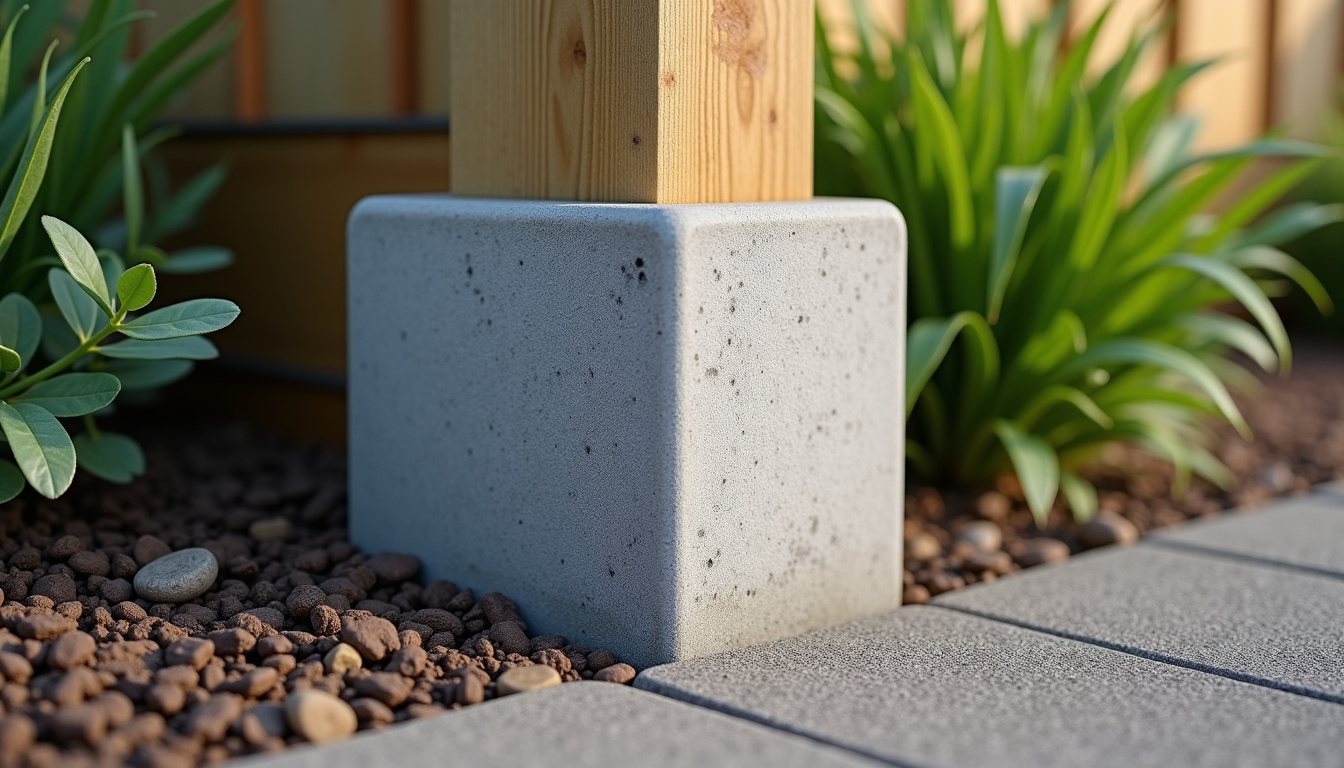
Ask anyone who has rebuilt a garden fence what went wrong with the old one, and the answer is almost always at ground level: a post snapped off at soil height, or the bottom of the panels turned soft. This guide compares the two common post materials, explains what gravel boards do, and gives practical sizes and depths to work from.
Why posts fail
A fence works like a row of levers. Wind pushes on the panels, the panels push on the posts, and the posts try to rotate around the point where they enter the ground. That point is also where timber is wettest, most oxygenated and most attractive to fungi. The result is predictable: timber posts tend to rot and break just at or below ground level, while concrete posts tend to fail by leaning if the footing is too shallow or the hole too small.
Concrete posts
Concrete fence posts are reinforced with steel and come in three main forms: slotted posts that take panels in a groove, mortised posts with holes for arris or cant rails, and repair spurs that bolt to a broken timber post. Typical sections are around 100 mm square, with lengths of 2.4–2.75 m for 1.8 m fences.
Advantages
- They do not rot, so the post usually outlasts the timber.
- Slotted posts make panel replacement simple: lift the old panel out, drop a new one in.
- They resist the twisting that breaks timber posts in strong wind.
Disadvantages
- They are heavy, often 30–40 kg or more, so moving and setting them is two-person work.
- Some people dislike the look. They can be painted with masonry paint or hidden by planting.
- Panels can rattle in the slots and lift out in high winds unless clipped or packed.
- Hitting one with a vehicle or a falling tree can crack it, and cracked posts should be replaced, not patched.
Timber posts
Timber posts for garden fences are usually softwood, pressure-treated, in 75 mm, 100 mm or 125 mm square sections. Oak posts are sometimes used for closeboard and post-and-rail fences and can last a long time, though they are more expensive.
The key thing to check is the treatment class. Posts going into the ground should be treated to Use Class 4 (UC4), which is the class intended for timber in contact with the ground or fresh water. Timber treated only to UC3 is for above-ground use and will usually fail much faster when buried. Look for the use class on the supplier's description and keep the paperwork. Our guide to treating and staining timber explains the use classes in more detail.
Advantages
- Lighter and easier to cut and fix than concrete.
- Look natural and blend in with timber boards.
- Work well for closeboard fences, where rails are fixed into or onto the posts.
Disadvantages
- Will eventually rot at ground level, however good the treatment.
- Can twist or crack as they dry.
- Panels fixed to timber posts with clips rely on screws holding in the post, which can loosen over time.
Metal post options
Galvanised steel and aluminium posts are used with composite and some timber systems. They do not rot and are lighter than concrete. Check that the post profile, wall thickness and spacing match the manufacturer's guidance for your fence height and exposure.
Size and depth
| Fence height | Typical post length | Typical depth in ground | Typical timber section |
|---|---|---|---|
| 0.9–1.2 m | 1.5–1.8 m | 450–600 mm | 75 mm |
| 1.5 m | 2.1 m | about 600 mm | 75–100 mm |
| 1.8 m | 2.4 m | about 600 mm | 100 mm |
| 1.8 m on an exposed site | 2.7 m | 750–900 mm | 100–125 mm |
These are common working figures, not engineering calculations. If you are adding a gravel board under a 1.8 m panel, remember to allow for it in the post length, and keep the total within the planning height limits.
Setting posts: concrete, postcrete or hardcore
Holes are usually about three times the width of the post. Put 100 mm or so of gravel in the bottom so water drains away from the post end. Then either:
- Concrete: a conventional mix, tamped around the post and finished with a sloping top so water runs away from the timber.
- Rapid-set post mix: poured dry and topped with water. Convenient for small jobs; follow the packet's ratio and do not overfill with water.
- Compacted hardcore: traditional for timber posts. Allows drainage and makes later removal easier, but needs thorough tamping.
Some people prefer to set timber posts in metal "post shoes" or bolt-down sockets on hard surfaces. These keep the timber out of the soil, but they create a hinge point, so they suit low or sheltered fences better than tall, exposed ones.
Gravel boards
A gravel board is a horizontal board, usually 150 mm or 300 mm deep, fixed along the bottom of the fence between posts. Its job is to stop the panel or the featheredge boards sitting in contact with the soil. When it eventually decays, it can be replaced cheaply.
Concrete or timber?
Concrete gravel boards slot into concrete posts or sit in brackets on timber posts. They do not rot and act as a modest barrier to digging pets. Timber gravel boards should be UC4 treated, as they will be in contact with damp soil. On a closeboard fence, a timber gravel board is often fixed to small "centre stumps" between posts to stop it bowing.
Keep soil and mulch from building up against the gravel board. A border raised against the fence will rot it quickly, and a few centimetres of clear space or gravel along the base buys years of life.
Which should you choose?
For panel fences in most gardens, slotted concrete posts with concrete gravel boards are the low-maintenance choice. For closeboard fences, where the look matters, or where access makes heavy posts impractical, UC4 timber posts properly set will do the job, especially in sheltered gardens. On exposed or windy sites, prioritise post strength and depth over everything else, and see fence types compared for designs that catch less wind.
When you are ready, our step-by-step installation guide takes you through setting posts and panels in order.