Hedges vs fences: choosing a boundary
A hedge is slower and needs trimming, a fence is instant and needs replacing. The right answer depends on your space, your patience and the person next door.
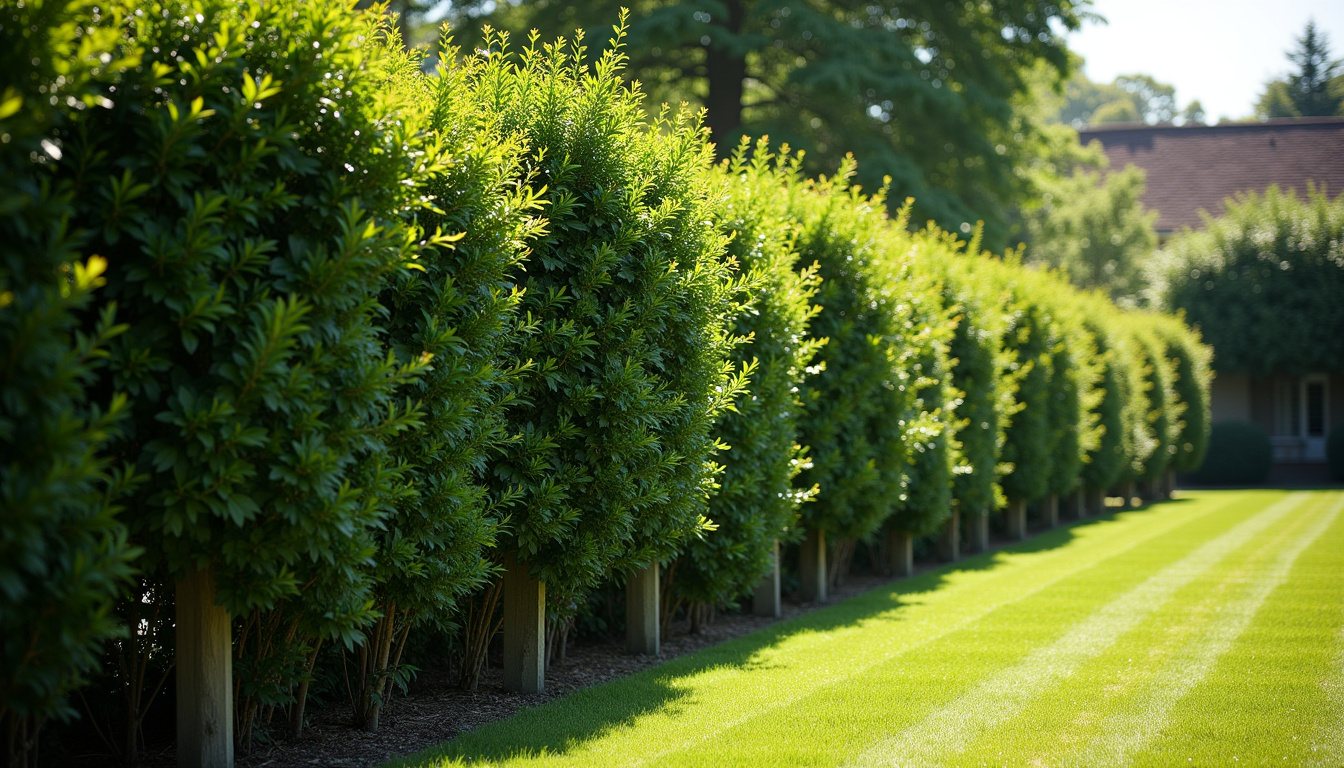
Fences dominate suburban back gardens, but hedges were the default UK boundary for centuries, and there are good reasons to consider one. This guide compares the two honestly and covers the rules that apply to hedges, from overhanging branches to formal high hedge complaints.
The quick comparison
| Fence | Hedge | |
|---|---|---|
| Instant privacy | Yes | No, usually several years to fill out |
| Space taken | About 100 mm | Often 0.6–1 m or more |
| Upkeep | Staining, repairs, eventual replacement | Trimming once or twice a year, watering while young |
| Wind | Solid fences catch full load | Filters wind, reducing gusts |
| Wildlife | Little value unless planted up | Food, shelter and nesting sites |
| Planning permission | Needed above height limits | Not needed, though covenants may restrict |
| Lifespan | Timber typically years to decades | Many decades if looked after |
Why choose a hedge
A hedge is a living windbreak. It slows wind rather than blocking it, so plants on the lee side get less buffeting than behind a solid fence. It provides food and cover for birds and insects. It absorbs some noise and looks softer, especially on a front boundary. And it is not counted as a structure for planning purposes, so the 1 m and 2 m fence height limits do not apply, though planning conditions on some estates and covenants in deeds may still restrict planting.
The costs are time and space. Bare-root hedging planted in winter is inexpensive, but it takes several seasons to become a real screen. A mature hedge can be a metre deep, which matters in small gardens. It needs trimming, and the clippings need to go somewhere.
Choosing hedge plants
- Native mixed hedges of hawthorn, blackthorn, hazel, field maple and similar species are excellent for wildlife and good in rural or semi-rural settings.
- Beech and hornbeam hold their brown leaves through much of the winter when clipped, giving partial year-round screening.
- Yew and holly are slow-growing, evergreen and long-lived. Yew is toxic to people and animals, which matters around livestock, dogs and children.
- Privet, laurel and box are traditional suburban choices. Box has suffered from box blight and box tree caterpillar in many areas.
- Fast conifers such as Leyland cypress give quick screening but can grow very tall very fast and are the plant behind many high hedge disputes. Plan to keep them trimmed from the start.
Combining a hedge with a fence
A popular compromise is a cheap post and rail or post and wire fence along the line, with a hedge planted on your side. The fence marks the boundary and holds in pets while the hedge grows; eventually the hedge takes over. Planting slightly inside your boundary allows for growth and access for trimming without going onto your neighbour's land.
Planting a new hedge
Bare-root hedging plants are sold and planted in the dormant season, roughly November to March, when the ground is not frozen or waterlogged. They are much cheaper than pot-grown plants and usually establish well. Container-grown plants can go in at other times of year but need careful watering in dry spells.
- Prepare a strip, not individual holes: clear grass and weeds from a band about 60 cm wide and dig it over.
- Plant densely. A single row at around three to five plants per metre suits most garden hedges; a staggered double row thickens faster and is common for native mixes.
- Cut back after planting for many deciduous species, such as hawthorn and blackthorn, to encourage bushy growth from the base.
- Mulch and water through the first two summers. Lack of water in the first year is the most common reason new hedges fail.
- Protect from rabbits with spiral guards in rural gardens.
Plant far enough from the boundary that the mature hedge stays on your side. If the hedge will be 1 m wide, plant at least 50 cm in, and more if you want space to trim the far face without going onto your neighbour's land.
Overhanging branches and roots
Under common law in England and Wales, you can usually cut back branches and roots that cross onto your land, up to the boundary line, without your neighbour's permission. You should not go onto their land, and you should not cut in a way that kills or seriously damages the plant. The cuttings belong to the hedge owner, so the polite course is to offer them back rather than throwing them over. Before cutting, check:
- whether the tree or hedge is covered by a Tree Preservation Order or sits in a conservation area, in which case you may need the council's consent;
- whether birds are nesting (see below);
- whether a restrictive covenant affects it.
Nesting birds
All wild birds, their active nests and eggs are protected. In Great Britain the Wildlife and Countryside Act 1981 makes it an offence to intentionally take, damage or destroy the nest of a wild bird while it is in use or being built; Northern Ireland has equivalent protection under the Wildlife (Northern Ireland) Order 1985. The main nesting season runs broadly from March to August, and many wildlife organisations advise avoiding hedge trimming in that period. If you must cut then, check thoroughly first and leave active nests undisturbed.
High hedges complaints
England and Wales
Part 8 of the Anti-social Behaviour Act 2003 lets an owner or occupier complain to the council about a neighbour's high hedge that adversely affects the reasonable enjoyment of their home. To qualify, the hedge must be formed wholly or mainly by a line of two or more evergreen or semi-evergreen trees or shrubs, be over 2 m above ground level and act to some degree as a barrier to light or access. Single trees and deciduous hedges are outside the scheme.
You must first try to settle the matter with the neighbour, and councils can charge a fee for handling a complaint. If the council upholds the complaint, it can issue a remedial notice requiring the hedge to be reduced and maintained at a set height. It cannot require it to be cut below 2 m or removed. GOV.UK publishes guidance on the high hedges complaints system.
Scotland
The High Hedges (Scotland) Act 2013 gives a similar route to complain to the local authority about a hedge over 2 m tall that forms a barrier to light. The Scottish definition differs in detail from the English one, so check the current Scottish Government guidance and your council's process.
Northern Ireland
The High Hedges Act (Northern Ireland) 2011 provides a comparable system, administered by councils.
Hedges, fences and boundaries
A hedge on the boundary can blur exactly where the line runs, especially if it has spread over decades. If ownership matters, see who owns the fence and boundary disputes. For wildlife-friendly gaps in fences, see fencing for dogs and wildlife.