Fencing for dogs and wildlife
A fence that keeps your dog in does not have to keep every hedgehog out. With a little planning you can do both.
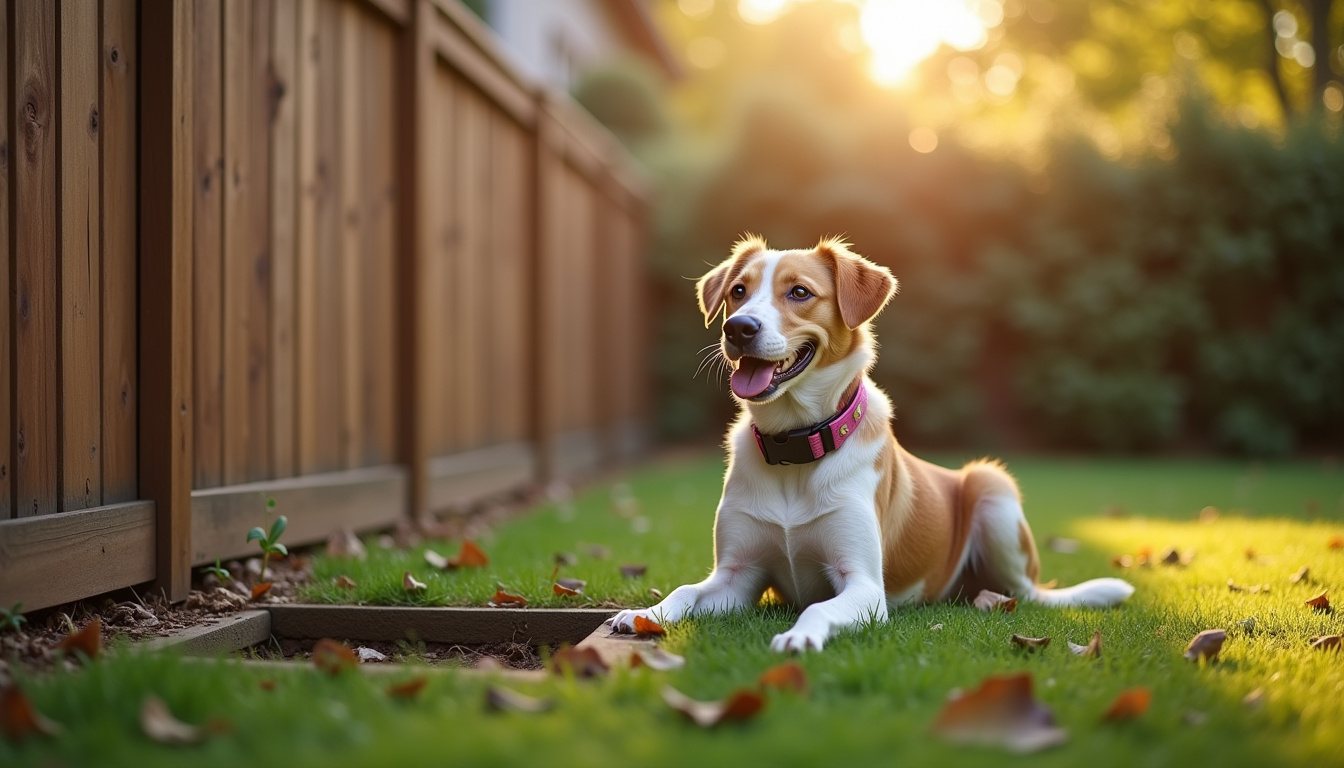
Dog owners want the garden to be escape-proof. Wildlife lovers want hedgehogs, frogs and toads to move between gardens. These aims are less in conflict than they seem, because what keeps a dog in is mostly height and solid base, and what lets wildlife through is a small, well-placed gap.
Understanding how your dog escapes
Dogs get out in three main ways: over, under and through. Spend a few days noticing which applies to yours.
- Over: jumping or scrambling, often from a launch point such as a bench, compost bin or raised bed near the fence.
- Under: digging, typically at a soft spot or where the gravel board has rotted.
- Through: gaps between boards, loose panels, broken slats or an unlatched gate.
Height
There is no legal minimum height for a dog fence. As a rough guide, small and calm dogs are often fine behind 1.2 m, many medium dogs need 1.5 m and athletic or large breeds may need 1.8 m. In England, anything over 2 m generally needs planning permission, and over 1 m next to a road used by vehicles, so for a front garden a determined jumper may need a different approach, such as keeping the dog to the back.
Inward-angled toppers or "coyote rollers" can deter climbers, but count towards overall height if fixed to the top of the fence.
Stopping climbing
Horizontal rails act as a ladder. On closeboard and post and rail fences, put the rails on the outside face where possible, or cover them on the inside. Move bins, benches, log stores and planters at least a metre away from the fence. Smooth vertical boards are much harder to climb than lap panels with horizontal slats.
Stopping digging
- Concrete gravel boards set into the ground a few centimetres give a solid base.
- Buried mesh: galvanised or plastic-coated weld mesh fixed to the bottom of the fence and buried vertically about 300 mm, or laid as a horizontal apron of 300–600 mm on the inside, stops most diggers.
- Paving or stones: a strip of slabs or large stones along the inside base works well and helps keep soil off the fence.
Closing gaps
Check panels regularly, especially after storms. Lap panels develop gaps as slats shrink. Replace rotten gravel boards. Fit gate bolts low and high so that a gate cannot be nudged open, and close up any gap under the gate. For gates, see garden gates and security.
Fence types that suit dogs
Some designs are naturally better for dogs than others. Our fence types guide covers each in detail; here is how they look from a dog owner's point of view.
| Fence type | For dogs | Watch out for |
|---|---|---|
| Closeboard | Solid, smooth face if rails are on the far side; reduces barking at passers-by | Rails on the inside give a foothold |
| Lap panels | Cheap and solid when new | Slats split and gaps open; horizontal slats are climbable |
| Slatted / hit-and-miss | Smart and strong | Horizontal slats can be climbed; gaps must be narrow |
| Picket | Fine for small, calm dogs | Too low for most others; pointed tops can injure |
| Post and rail | Only with mesh fixed on the inside | Dogs walk straight through the rails |
| Metal railings | Durable, hard to chew | Bar spacing must be tight for small dogs; can be climbed |
Solid fences also reduce a dog's view of the street, which cuts down on barking at people and other dogs walking past. That can matter as much to neighbours as escape-proofing.
The legal side for dog owners
In England and Wales, the Dangerous Dogs Act 1991 makes it an offence to allow any dog to be dangerously out of control in any place, including private property such as your garden. Owners have a duty of care under the Animal Welfare Act 2006. Scotland has the Control of Dogs (Scotland) Act 2010, and Northern Ireland has its own dog control legislation. A secure fence is part of meeting your responsibilities. GOV.UK has guidance on controlling your dog.
Hedgehogs and hedgehog highways
Hedgehogs travel a long way in a night, often a kilometre or more, looking for food and mates. Solid garden fences cut their range into isolated pockets. Hedgehogs are listed as vulnerable to extinction in Great Britain on the Mammal Society's red list, and joining gardens together is one of the simplest ways to help them.
Making a hedgehog hole
- Cut a gap about 13 cm by 13 cm at ground level in the gravel board or base of the fence. This is the size recommended by UK hedgehog conservation groups.
- Agree it with your neighbour first, since it connects the two gardens.
- Smooth or treat cut edges and keep the gap clear of debris.
- Some gravel boards and panels are sold with ready-made hedgehog openings.
A 13 cm square is too small for most dogs to get through, but very small dogs and puppies may manage it, so watch your dog the first time it finds the hole. A short tunnel or a small hinged flap that only opens one way are not good substitutes: hedgehogs need a clear opening.
Other wildlife
- Frogs and toads use the same ground-level gaps.
- Birds benefit from climbers and wall shrubs grown on wires along the fence, and from hedges. See hedges vs fences.
- Badgers and foxes can damage fences when they push through. If a well-used badger path crosses your boundary, a badger gate may be more practical than trying to block it. Badgers and their setts are protected by law, so do not block an active sett.
- Deer and rabbits in rural gardens need specific fence designs: taller for deer, and mesh buried at the base for rabbits.
Safe materials
Avoid barbed wire and loose netting at low level, which can trap and injure animals. Clear away loose wire, string and garden netting. When treating fences, keep pets away until the product has dried, and follow the product label.
Putting it together
A typical dog-and-wildlife-friendly back garden fence might be a 1.8 m closeboard fence on concrete posts with concrete gravel boards, rails on the outside face, a strip of paving along the inside base where the dog digs, and one or two 13 cm hedgehog gaps in the gravel boards on agreed boundaries. Pick your fence type accordingly and see costs for a rough budget.