Garden gates and security
A side gate is often the weakest point of a home's boundary. Getting the structure, the hanging and the locking right turns it from a gap in the fence into a real barrier.
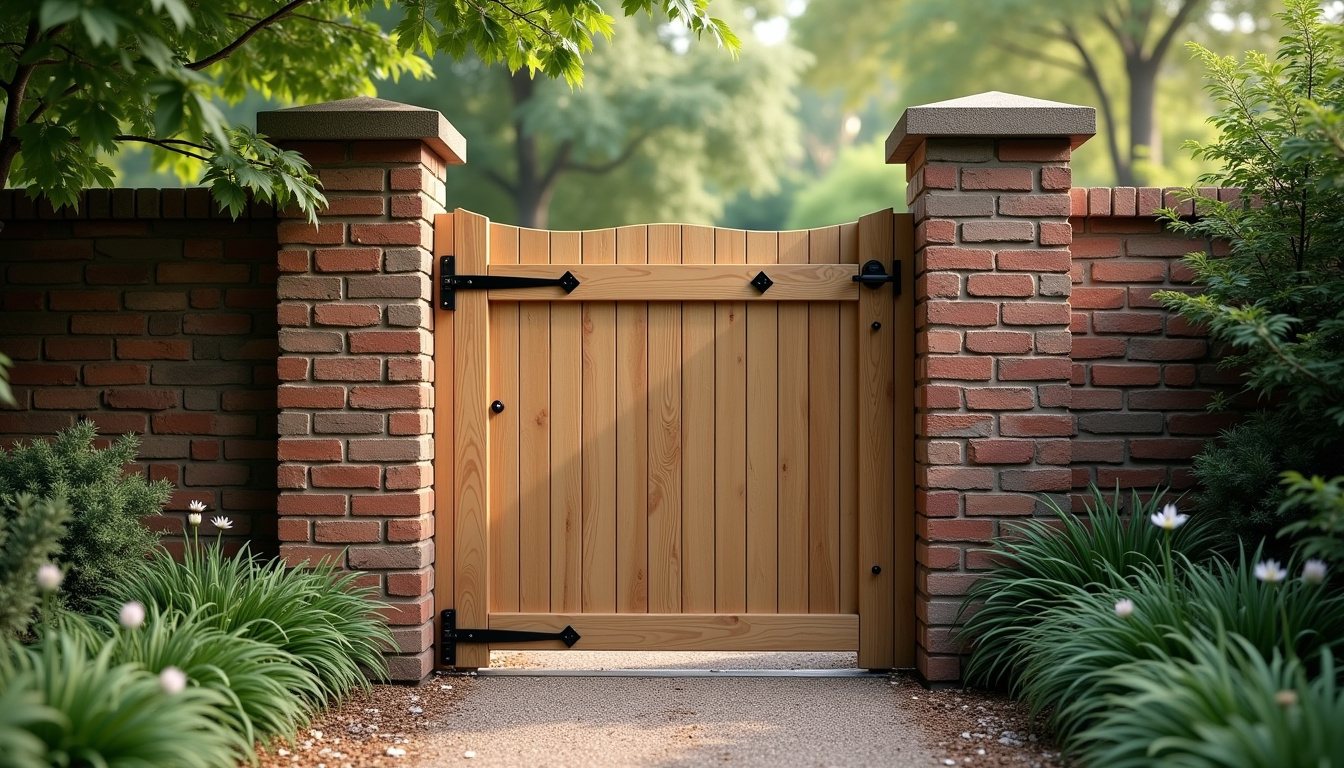
Burglars and opportunist thieves rarely climb a 1.8 m fence when there is a gate with a simple thumb latch next to the bins. Garden gates matter for security, privacy and, for many people, keeping pets and children in. This guide looks at where gates go, how to build or choose one that stays square, and how to lock it.
Position matters most
Police crime prevention advice in the UK consistently makes the same point: side and rear access gates should be positioned as close to the front of the house as possible, so that anyone tampering with them is visible from the street. A gate set halfway down a side passage gives an intruder cover while they work on it. If you have a side passage, consider moving the gate forward to the building line.
Your local police force's crime prevention pages and the police.uk website are good starting points for current advice.
Gate types
- Ledged and braced timber gates: vertical boards on horizontal ledges with a diagonal brace. Simple, traditional and strong if braced correctly.
- Framed, ledged and braced gates: add a full perimeter frame, making them stiffer and better for taller side gates.
- Featheredge or closeboard gates: match a closeboard fence and give full privacy.
- Metal gates: steel or aluminium, often used at the front. Harder to cut through but can be climbed if they have horizontal bars.
- Driveway gates: larger single or double gates, sometimes automated. These need substantial posts or piers and careful thought about the highway.
Bracing a timber gate the right way
Timber gates sag when the brace is the wrong way round. The diagonal brace should run upwards from the bottom ledge on the hinge side to the top ledge on the latch side. That way the brace is pushed (in compression) by the weight of the gate rather than pulled, and it stops the latch corner dropping. Ready-made gates are sometimes fitted on the wrong side by mistake, so check before hanging.
Posts and hanging
The hinge post carries the whole weight of the gate as a lever. It should be at least as strong as the fence's best post: a 100 mm timber post set deep in concrete is a minimum for a full-height side gate; 125 mm or more for wide or heavy gates. Fixing hinges directly to a masonry wall or pier with suitable heavy-duty anchors is often stronger still.
Use hinges sized for the gate. Tee hinges are common on light gates; heavier strap or band-and-hook hinges suit taller or wider gates. Use at least three on a tall side gate. Fit the hinges with coach screws or bolts through the gate rather than short wood screws, and on the outside face use security screws or bolts with the heads shaped so they cannot be undone, if the hinges are exposed.
Leave a gap of around 10 mm under the gate and slightly less at the latch side, allowing for the timber to swell in winter.
Locks, bolts and latches
- Bolts top and bottom on the inside of a side gate are cheap and effective. Fit the top bolt high enough that it cannot easily be reached over the gate.
- Padlockable latches or hasps let you lock the gate from inside. Choose a padlock with a shrouded shackle where possible.
- Key-operated gate locks are useful for gates that need opening from both sides.
- Avoid a gap above the gate that makes it easy to reach over and open the latch.
Choosing timber and fixings
Gates take more knocks and more movement than fence panels, so material quality matters more. Look for straight, well-seasoned boards without large loose knots, and a frame with properly jointed corners rather than simple butt joints. Pressure-treated softwood is the usual choice; hardwood gates are heavier and need stronger posts and hinges.
Use galvanised or stainless steel fixings throughout. Plain steel screws rust quickly outdoors and stain the timber. For hinges, galvanised or powder-coated finishes last far longer than painted black steel, which tends to rust at the knuckle.
Side passages, bins and lighting
Side passages often have to accommodate bins, bikes and access for meter readings or maintenance. Plan the gate so that it can be locked without making bin day a struggle. A gate wide enough for a wheeled bin, around 0.9 m clear, avoids the temptation to leave it unlocked. Avoid storing bins or anything climbable against the gate's outside face, since they make a convenient step.
Good lighting helps too. A low-energy light on a dusk-to-dawn sensor near the side of the house makes anyone at the gate visible. Point it downwards so that it does not dazzle neighbours or road users.
Gates on to the highway
Gates that open outwards across a pavement or road can injure passers-by and obstruct the highway. In England and Wales, the Highways Act 1980 gives highway authorities the power to require gates that open outwards on to a street to be altered so that they do not. Gates on to a road or pavement should therefore open inwards. Remember that the 1 m permitted development height limit next to a highway used by vehicles applies to gates as well as fences. New or widened vehicle access across a pavement usually needs separate approval from the highway authority for a dropped kerb.
Electric and automated gates
Automated driveway gates can cause serious crush injuries if poorly installed or maintained. Installation is a specialist job and should follow current safety standards, including safety edges or sensors and a manual override. If you have them, keep a record of regular maintenance. The Health and Safety Executive has published safety alerts on powered gates.
Gates for pets and children
Self-closing hinges and a gravity latch help keep a gate shut when someone forgets. Close the gap underneath to stop small dogs squeezing out, and avoid horizontal bracing on the outside face that a child could use as a ladder. For more, see fencing for dogs and wildlife.
Maintaining gates
Oil hinges and bolts a couple of times a year. Check that the latch still engages fully, since a gate that has dropped slightly will stop latching. Re-treat timber gates when you treat the fence, paying attention to the bottom edge. See treating and staining timber and, for cost guidance, what fencing costs in 2026.