Repairing storm and wind damage to fences
After a big blow, a leaning or flattened fence is one of the most common bits of garden damage in the UK. Most repairs are straightforward once you have worked out what actually failed.
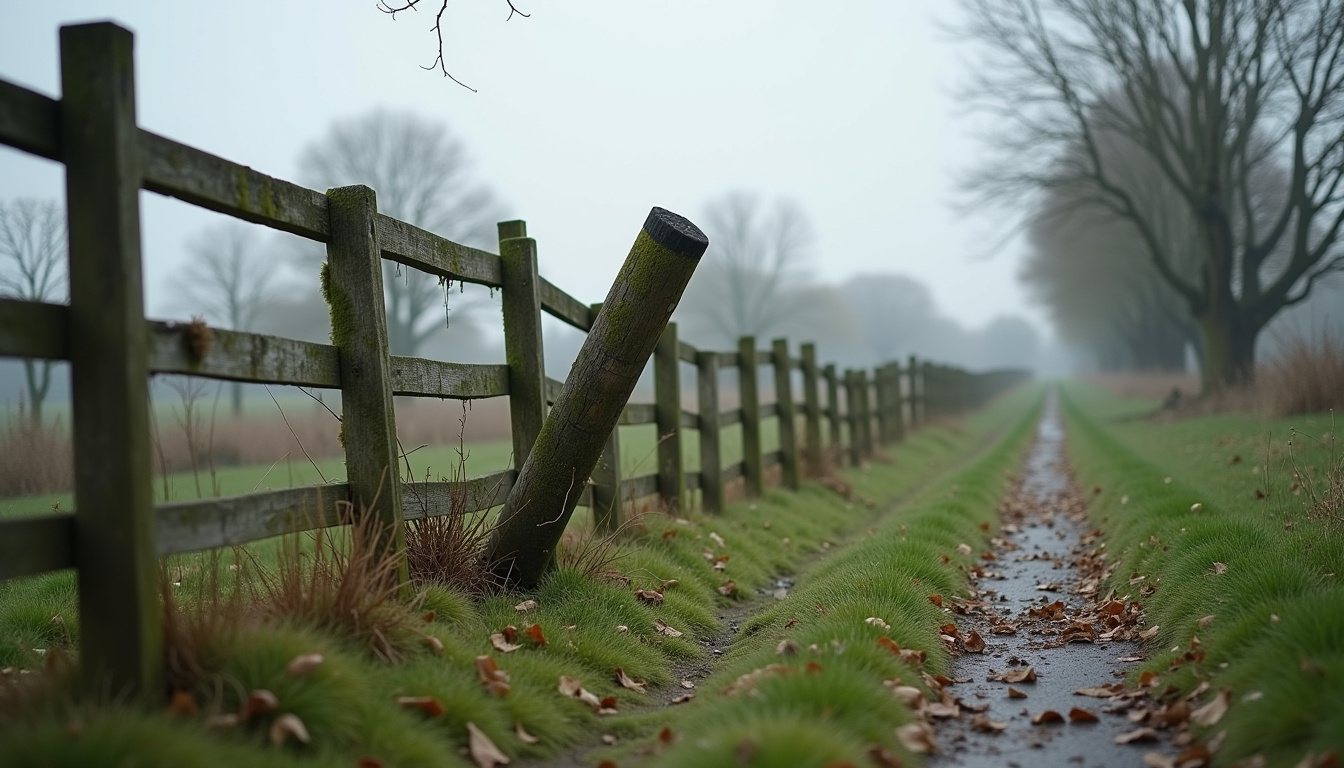
A fence that has survived for years can fail in one afternoon of strong gusts. The good news is that storm damage tends to follow a few patterns, and most of them can be fixed without rebuilding the whole run. This guide covers safety first, then diagnosis, repairs, insurance and prevention.
Make it safe first
- Stay away from a fence that is still moving in the wind. Wait until it calms down.
- If anything has fallen near overhead or service cables, keep well clear and call the electricity network operator on the national power cut number, 105.
- If the fence is blocking a pavement or road, let the highway authority (normally the council) know if you cannot clear it promptly.
- Lay loose panels flat so they cannot blow around, and take photos of the damage before you tidy up, in case you need them for an insurance claim.
Work out what failed
Look closely before buying anything. The repair depends on which component gave way.
| What you see | Likely cause | Usual repair |
|---|---|---|
| Timber post snapped at ground level, soft wood inside | Rot at the ground line | Concrete repair spur, or replace post |
| Post intact but leaning, footing lifted | Footing too shallow or small, soft ground | Dig out and reset deeper |
| Concrete post cracked or snapped | Impact, or extreme load | Replace post |
| Panel lifted out of concrete slots | Panel too loose in slots, high wind | Refit, add clips or packers |
| Panel torn off timber posts | Clips or screws pulled out | Refix with new clips into sound timber |
| Slats split or missing | Thin or dried-out panel slats | Replace panel, consider sturdier design |
Repairing snapped timber posts with a spur
When a timber post has rotted off at ground level but is still sound above, a concrete repair spur is the classic fix. A spur is a short reinforced concrete post, usually around 1.2–1.5 m long, set in the ground beside the old post and bolted through it.
- Support the fence with props so the post is upright.
- Dig a hole alongside the old post, on the side you own, deep enough for about half the spur's length.
- Stand the spur in the hole tight against the post and check the post is plumb.
- Mark and drill through the timber post using the spur's bolt holes as a guide, then fit coach bolts with washers.
- Concrete the spur in and leave props in place until it has set.
Metal repair spikes, which are driven into the ground next to the stump and bolted or screwed to the post, are an alternative in softer ground. They are quicker but generally less rigid than a concreted spur.
Resetting or replacing a post
If the post has leaned rather than broken, remove the adjacent panels, dig out the footing and reset the post deeper in a wider hole. If the timber is rotten, replace it with a UC4-treated post or switch to concrete. See concrete vs timber posts for depths and sizes.
Removing an old concrete footing is heavy work. If it is too stubborn, you can sometimes set the new post just to one side and adjust the panel width, or use a different bay arrangement.
Refitting panels in concrete posts
Panels blown out of slotted concrete posts are often undamaged. Slide them back in from above. If they were loose, fit panel clips or rubber packers in the slots so they sit snugly but can still move a little. Some owners screw a timber batten to the panel to stop it lifting; make sure fixings do not crack the concrete.
Replacing panels on timber posts
Where clips have pulled out, refix with new galvanised clips or brackets and screws into sound timber. If the post faces are split, move the fixing points or replace the post. Do not keep reusing the same screw holes.
Patching closeboard fences
Closeboard fences are easy to repair board by board. Prise off damaged featheredge boards, cut new ones to length, treat cut ends and nail them on with galvanised or stainless nails, keeping the overlap consistent. Broken arris rails can be supported with galvanised arris rail brackets screwed over the break or at the post joint.
Temporary fixes while you wait
After a widespread storm, fitters and materials can be in short supply for weeks. A few temporary measures keep the garden secure and stop further damage in the meantime.
- Prop leaning sections with lengths of timber angled from the ground to a rail or post, pegged at the base. Props on your own side only, unless the neighbour agrees.
- Take out loose panels rather than leaving them half-attached. A panel flapping on one clip will tear out the next post too.
- Close gaps for pets with temporary mesh or a spare panel lashed in place, so dogs cannot get out while the fence is down.
- Keep broken timber out of the way. Snapped boards have sharp splinters and protruding nails. Stack them away from paths and play areas.
- Check neighbouring fences. If a whole run has been weakened, the next gust will find the next weak post. Look along the line rather than just at the gap.
Avoid the temptation to accept the first door-to-door offer after a storm. Get written quotes and check exactly what is included, as explained in our costs guide.
Insurance
Many buildings insurance policies treat fences differently from the house. Common positions in policy wording include excluding fences, gates and hedges from storm cover, limiting the amount payable, and excluding damage due to wear and tear, rot or lack of maintenance. Policies vary, so read the wording. If you claim, photographs, receipts and the age of the fence will help. The Financial Ombudsman Service deals with complaints if you think an insurer has handled a claim unfairly.
Neighbours and responsibilities
Agree a plan with the neighbour if the fence is shared or falls into their garden. If it is unclear who owns it, see who owns the fence. You do not have an automatic right to enter their land to repair your fence, so ask.
Making it less likely next time
- Stronger posts: concrete or deeper-set UC4 timber, and closer spacing on exposed runs.
- Less sail area: slatted, hit-and-miss or open designs let air through. See fence types compared.
- Lower height on exposed sections: a 1.5 m fence catches far less load than a 1.8 m one.
- Remove the weight: heavy climbers and ivy add both load and moisture.
- Check before winter: push each post in autumn. If it moves, fix it before the gales do.
- Consider a hedge: on very exposed boundaries a hedge filters wind rather than blocking it. See hedges vs fences.
Rough repair and replacement costs are covered in our 2026 costs guide.